Market signalAdobe · 2025
693.4%
Adobe reported AI-driven retail traffic growth year over year, reinforcing AI discovery as a real acquisition channel.
00 · The methodologyUpdated Sep 12, 2026
Prime Sentia GEO is a Generative Engine Optimization platform for B2B marketing, SEO, brand, and content teams. It audits how AI answer engines describe your brand, prioritizes the fixes that move citation readiness, and plans 30/60/90-day execution. Start with a free audit.
Brief
What this hub is
Prime Sentia GEO is the methodology and proof layer behind the AI Visibility offer.
Every output carries provenance back to the signal and page that produced it. Not a commercial landing page: the deeper layer.
39 GEO citation signals — scored across the four GEF dimensions (Accessibility, Extractability, Authority, Citability) — plus 22 Agent-Readiness checks across six categories. Of those, 16 are pre-registered and empirically grounded in an observational study of 2,000 websites; the rest are validators from production experience. No probabilistic scoring, no black-box optimization — each maps to a concrete fix.
The 16 GEO signals are derived from an observational study (DOI 10.17605/OSF.IO/XCG7J) across 2,000 websites. Study design, variable definitions, and the analytical plan were registered on the Open Science Framework before any data was collected — so every signal carries documented empirical provenance, not a marketing claim.
Market signals from Adobe and Bain, research from Princeton and KDD 2024, and platform documentation from OpenAI and Google support the framework. The full dossier is in the Evidence section. Where proprietary client results are not published, the site says so plainly — no invented case-study language.
Extract brand entities, narrative, products, audiences, and proof signals.
Measure AI visibility and evaluate citation-readiness across priority pages.
Standardize brand context so recommendations and roadmap planning stay consistent.
Rank actions by visibility impact, complexity, and business relevance.
Convert findings into a 30/60/90 roadmap with dependencies.
Hand teams executable guidance for content, SEO, brand, and web work.
See the capability map behind the Prime Sentia GEO system, from brand discovery and AI visibility auditing to recommendations and execution planning.
Review the concrete deliverables produced by each engagement: AI visibility audit, citation-readiness assessment, prioritized recommendations, roadmap, and on-demand task guidance.
Explore how GEO supports AI search optimization by industry, category complexity, and team structure.
Review market evidence and external proof showing why AI visibility and answer-engine discoverability matter now.
Read the core category questions: AI visibility, GEO, AEO, AI Overviews, ChatGPT citations, and how GEO differs from SEO.
Read editorial research focused on GEO, answer engines, AI discoverability, and AI citation strategy.
Evidence, not invented case-study language.
Underlying researchDOI 10.17605/OSF.IO/XCG7JLuis Oleart
This hub uses an evidence layer built from market signals, published research, and platform documentation. Where proprietary client results are not being published, the site says so plainly instead of pretending market proof is a case study.
Adobe reported AI-driven retail traffic growth year over year, reinforcing AI discovery as a real acquisition channel.
Princeton GEO research showed measurable visibility lift when content is structured for generative engine retrieval.
Bain reported heavy reliance on AI-written summaries, confirming that answer layers influence consideration before the click.
The shortest path to the answers most teams need before they engage.
Open the full reference →Prime Sentia GEO is a structured operating model for improving how brands are retrieved, cited, and represented inside AI-generated answers. It combines brand discovery, AI visibility auditing, standardized brand context, recommendations, prioritization, and implementation planning.
SEO focuses on ranking in traditional search results. Prime Sentia GEO focuses on how a brand is understood and cited inside AI-generated answers, including AI Overviews, ChatGPT, Perplexity, and Bing Copilot.
Prime Sentia GEO produces an AI visibility audit, a citation-readiness assessment, prioritized recommendations, and a 30/60/90 roadmap for content, SEO, brand, and web execution. Teams can resolve selected dashboard tasks on demand when they need implementation detail.
Prime Sentia GEO is designed for marketing directors and growth teams at mid-size and enterprise brands that need a clearer system for AI visibility, citation readiness, and answer-engine discoverability.
The first step is Discover, where Prime Sentia extracts brand entities, narrative, products, audiences, and proof signals before moving into visibility analysis and structured remediation.
Prime Sentia turns audit findings into implementation-ready outputs so internal teams can move from analysis to action with clear priorities, dependencies, and execution guidance.
The Prime Sentia AI Visibility Audit evaluates 39 GEO citation signals across four GEF dimensions — Accessibility, Extractability, Authority, and Citability. Of these, 16 are pre-registered in an observational study of 2,000 websites (DOI 10.17605/OSF.IO/XCG7J); the remaining 23 are validators added from production experience.
A2A (Agent-to-Agent) agents are autonomous workers that run structured tasks — brand discovery, page capture, visibility auditing, recommendation generation, and roadmap planning — coordinated by a geo-strategist orchestrator. Each agent emits traceable events, so every recommendation carries provenance back to the signal that triggered it.
A standard engagement runs four phases: Discover (brand extraction and crawl), Audit (visibility measurement and citation-readiness scoring), Decide (prioritized recommendations), and Ship (30/60/90 roadmap with task-level guidance). Most teams complete the full cycle in two to three weeks.
GEO is a structural discipline, not a traffic switch. Early signals — improved entity representation and structured data — take effect within days of implementation. Visibility lift in AI-generated answers typically materializes over four to eight weeks as answer engines re-index and re-rank. The 30/60/90 roadmap is designed to match this cadence.
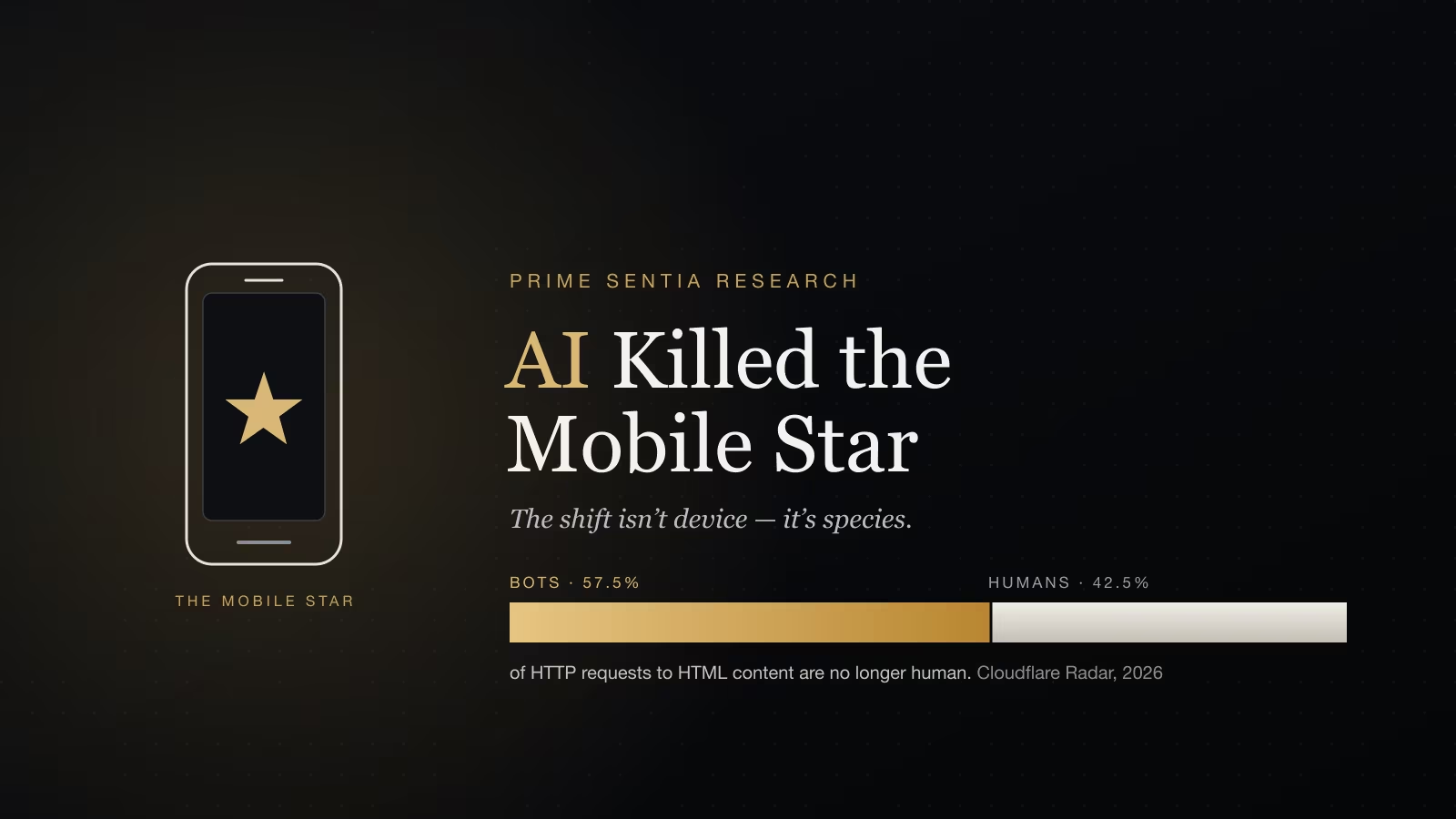
Pull raw web traffic and desktop looks like it is winning again — until you filter the bots, and humans are still mobile-first. Bots are now 57.5% of requests to HTML content. The real shift isn't device, it's species: human or agent?
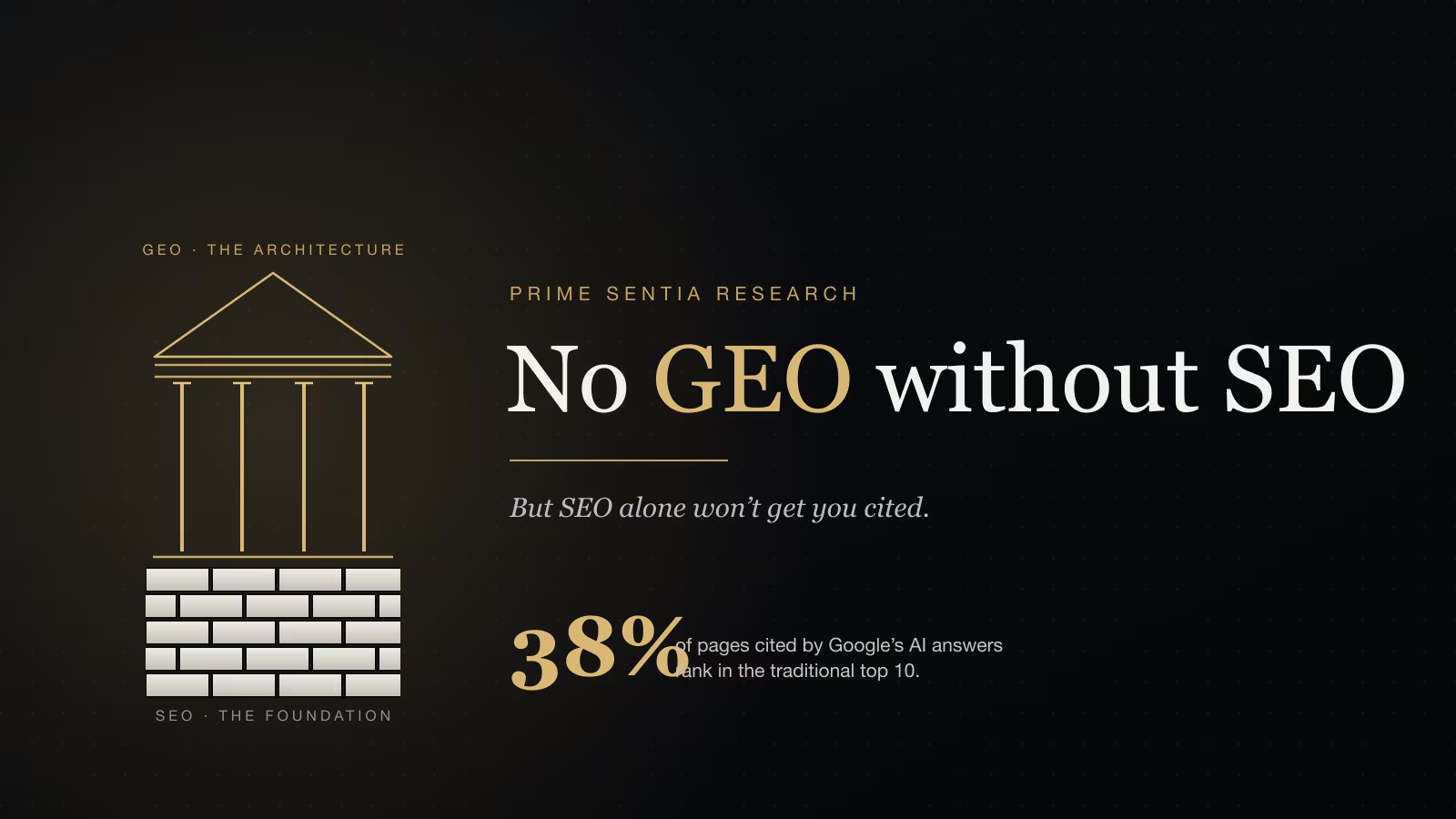
SEO and GEO aren't rivals — they're two trades. SEO builds the crawlable, authoritative foundations an engine can reach; GEO designs citability on top. Only 38% of pages cited by Google's AI answers rank in the traditional top 10.
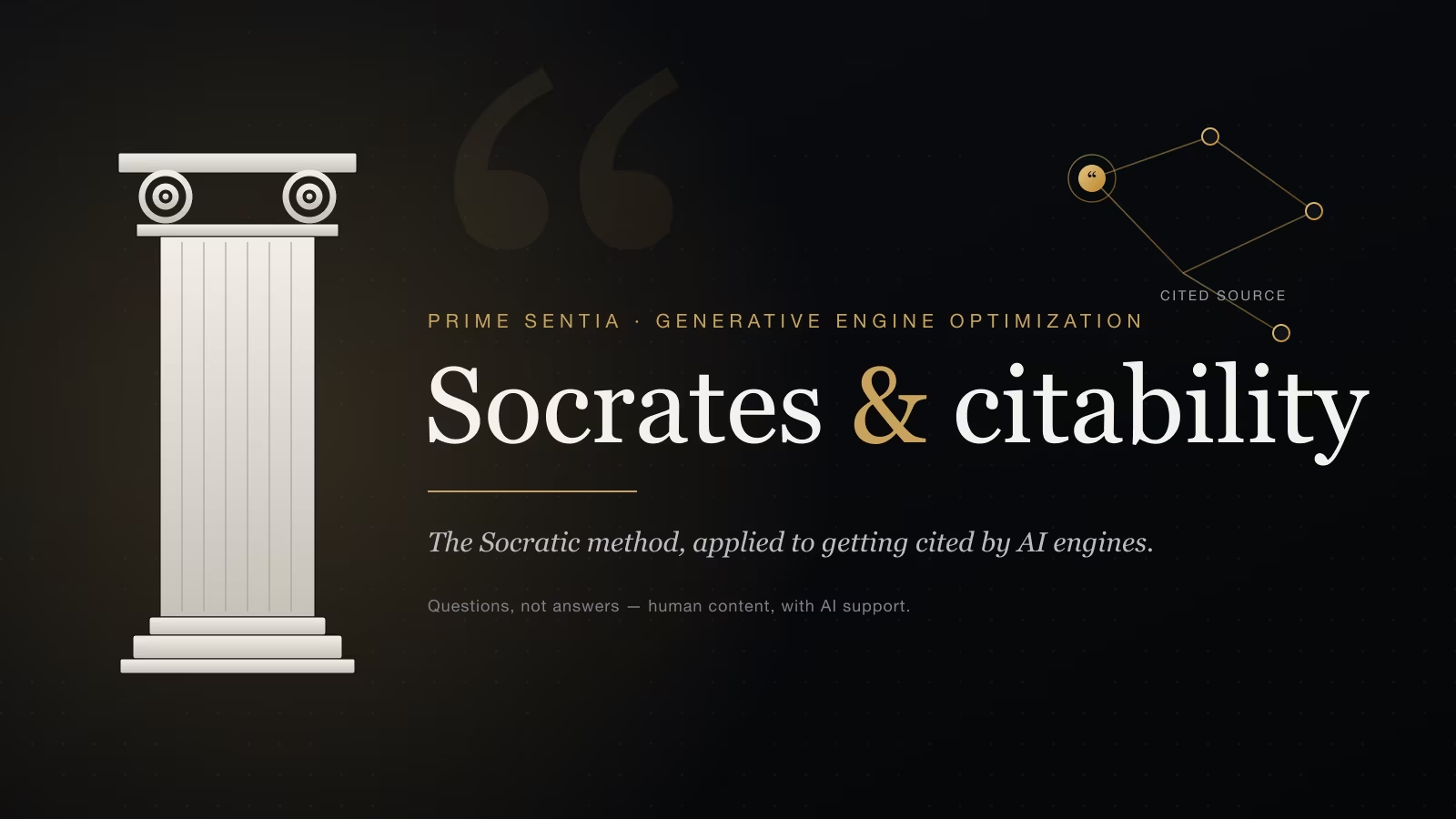
The Socratic method — questions, not answers — is why human, experience-grounded content gets cited. A look at citability, the Compose ethic, and how ChatGPT, Perplexity, and Gemini actually cite in 2026.
Enter your domain and email and we'll open the auditor with your brand pre-filled. Under two minutes, 39 GEO signals, no credit card, no demo call.